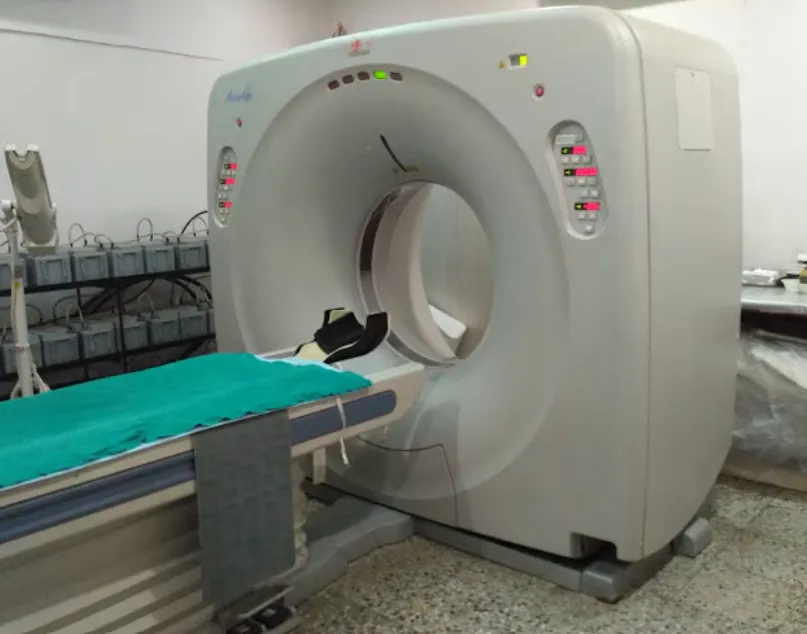
A CT scan can provide detailed cross-sectional images of internal structures within a relatively short examination time. It may be recommended for conditions involving the head, chest, abdomen, bones, blood vessels and several other areas. Patients searching for the Best CT Scan Centre in Nagpur should understand that the quality of a CT examination depends on more than the scanner alone.
Correct examination selection, appropriate preparation, image acquisition and professional interpretation all contribute to a useful diagnostic report.
How Does a CT Scan Work?
Computed tomography uses X-rays and computer processing to produce detailed images of the body. Unlike a conventional X-ray, which generally produces a two-dimensional projection, CT can provide multiple sectional images.
Depending on the clinical question, a doctor may advise a plain CT scan or a contrast-enhanced study.
Contrast material can make certain organs, blood vessels or abnormalities easier to evaluate. However, contrast is not necessary for every CT examination.
Why Was a CT Scan Recommended?
Doctors use CT imaging for many different diagnostic situations. Depending on symptoms and medical history, it may assist in evaluating:
- Head injuries
- Chest conditions
- Abdominal or pelvic symptoms
- Kidney or urinary tract concerns
- Bone injuries
- Certain infections
- Suspected masses
- Blood vessel conditions
- Emergency medical problems
The appropriate examination depends on what the referring doctor is trying to investigate.
What Should You Tell the CT Centre Before the Scan?
Providing accurate medical information is an important part of CT preparation.
Tell the diagnostic team if you have relevant allergies, previous reactions to contrast material, kidney-related problems or other medical conditions that could affect the planned examination. Women who are pregnant or think they could be pregnant should inform the healthcare team before imaging.
For some contrast studies, recent kidney function test results may be requested according to the patient’s circumstances and the imaging protocol.
Is Fasting Always Necessary?
No. Preparation differs considerably between CT examinations.
Some scans require fasting, while others do not. Patients should follow the instructions provided for their particular study rather than assuming that all CT scans have identical preparation requirements.
If oral contrast or intravenous contrast is planned, additional instructions may be provided.
Why Previous Reports Are Useful
If you have undergone an earlier CT, MRI, ultrasound or X-ray for the same condition, take those reports and images to the appointment when available.
Comparison can help a radiologist determine whether an observed finding is new, stable or changing. This can be particularly useful when monitoring an existing condition or evaluating response to treatment.
What Makes a CT Service Patient-Focused?
Patients evaluating CT facilities in Nagpur can look beyond equipment specifications. Important considerations include appropriate protocols, trained technical staff, radiologist interpretation, clear preparation instructions and systematic reporting.
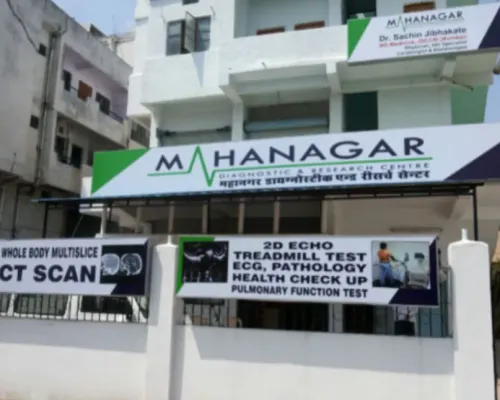
Mahanagar Diagnostic and Research Centre provides CT and other diagnostic services for patients in Nagpur. Having different diagnostic modalities available within a comprehensive centre may also be useful when a physician requires more than one type of investigation.
Understanding Your CT Report
Receiving a CT report is not the same as receiving a final diagnosis.
Radiologists describe imaging findings and provide an impression based on the examination. The treating doctor then considers those findings together with symptoms, physical examination, medical history and other investigations.
For patients across Nagpur and Maharashtra, choosing a CT centre should therefore involve more than looking for the nearest scanner. A well-conducted CT examination combines appropriate clinical information, suitable scanning protocols, quality imaging and careful interpretation so that the results can meaningfully contribute to the next stage of medical care.
Keywords